

Who Is the Audience, Really, in an IB Visual Arts Exhibition?
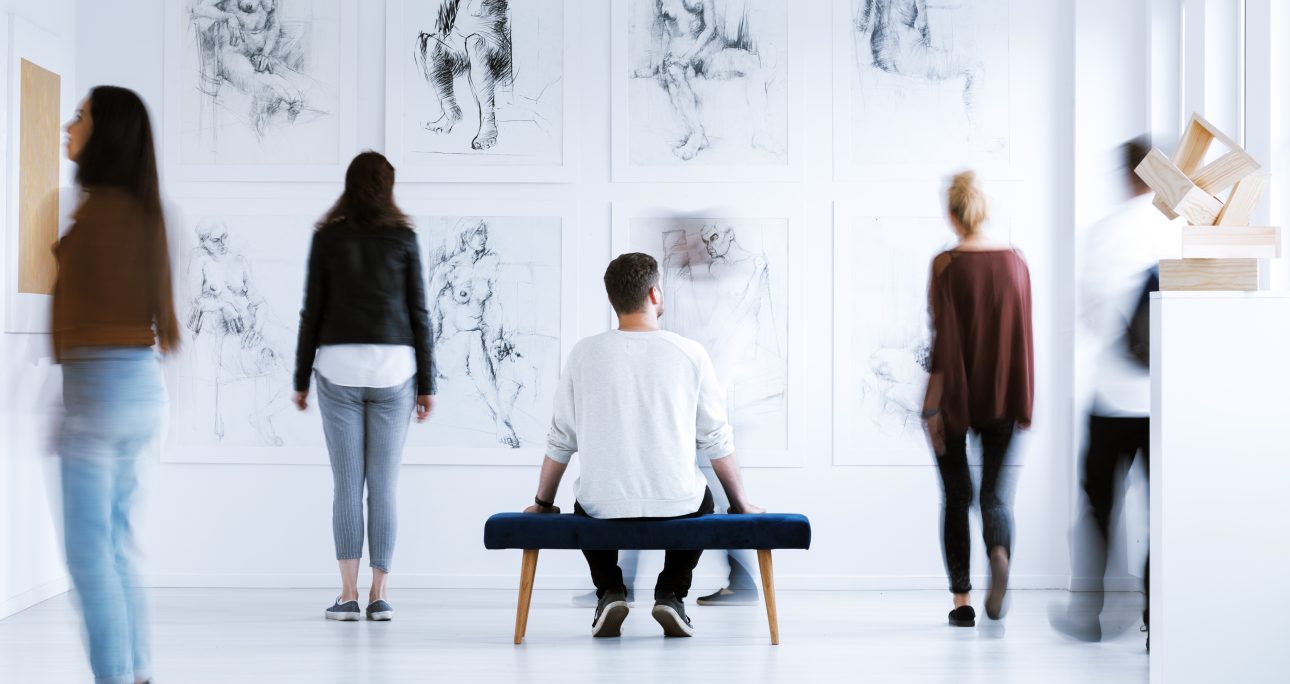
When people imagine an IB DP Visual Arts exhibition, they usually picture clean white walls, artworks lined up, small labels underneath, and people walking slowly from piece to piece. Quiet. Careful. Polite.
But that’s not really what matters.
What matters is the moment someone stops. Stands there. Looks at the work. And feels something, even if they don’t fully understand why.
In IB Visual Arts, the audience isn’t something that comes “after” the artwork. The audience is part of the artwork.
A painting, a sculpture, an installation, a performance… none of them are complete on their own. They need a reaction. A pause. A thought. A feeling. The work shifts the second it meets someone else’s eyes.
Known Faces and Strangers
One of the first uncomfortable questions students have to face is: Who is actually going to see this?
Sometimes it’s people they know. Friends. Teachers. Parents. Classmates. People who’ve watched them struggle, experiment, fail, improve. That kind of audience feels safe. Gentle. Supportive.
But then there are strangers.
Someone who walks in with no context. No emotional connection. No idea what the student went through to make the work. That person doesn’t owe the artwork kindness. And that’s where things get real.
Their reaction can’t be managed.
It can be confused.
It can be uncomfortable.
It can be honest.
And honestly, that’s where art starts to feel alive.
Are They Mentally Ready for Art?
Not everyone enters an exhibition prepared.
Some people walk in knowing they are there to experience art. They slow down. They look carefully. They try to “get it”.
Others don’t.
They bump into the work by accident. In a school hallway. A public corner. A space that wasn’t meant to feel like a gallery. These people don’t filter their reactions. They feel first and think later.
That kind of moment can be powerful.
But it can also be risky.
You’re placing something into someone’s day without asking their permission. That means it’s not only about creativity. It’s about responsibility.
That’s why students aren’t just taught how to make art. They’re taught how to think about impact.
Watching vs Doing
Not all audiences stay quiet.
Some people just look. Nods. Walks on. That’s the classic gallery experience.
But some artworks don’t work unless the audience physically does something.
Walk through it.
Touch it.
Move something.
Speak.
Listen.
Participate.
Without that action, the work feels empty.
More and more IB students are going in this direction. And when they do, they have to face some hard questions:
What am I asking someone to do?
Is this safe?
Is this fair?
Am I crossing a line?
These aren’t design questions. They’re human questions.
When the Artwork Stops Being an Object
Some contemporary artists don’t really care about objects anymore.
They care about relationships.
Spaces.
Conversations.
Systems.
One example is the group Future Farmers. They created spaces where people could bake bread, grow food, sit together, and talk. The artwork wasn’t the building. It wasn’t the furniture. It was the interaction between people.
That way of thinking slowly made its way into education.
IB students start to realise: It’s not always about making something pretty. It’s about creating something that does something.
The exhibition turns into less of a display… And more of a meeting.
No Viewer Is Empty
Nobody walks into an exhibition as a blank page.
They bring their culture.
Their fears.
Their memories.
Their beliefs.
Their bad days.
Their good days.
Two people can stand in front of the same work and walk away with completely different feelings. And both of them are right.
IB encourages students to sit with that idea: The audience’s world matters. The artist’s intention matters. The form matters. The time and place matter.
Meaning doesn’t live inside the artwork. It lives in the space between the work and the person.
Why This Fits Van Agha
At Van Agha, we think in a very similar way.
We don’t really believe in “empty visuals”. Whether we’re working with spatial design, interiors, branding, or identities, we think about how people move through space. How they pause. How they breathe in a place. How they experience it.
The audience is not a viewer.
They are part of the work.
They are part of the story.

We denounce with righteous indignation and dislike men who are so beguiled and demor alized by the charms of pleas ure of the moment.
The intruders chased the girl in the house and threatened her when she hid from them, according to the PSNI to Limavady Facebook.
It’s no secret that the digital industry is booming. From exciting startups to need ghor fore global and brands, companies are reaching out.